
Fitness
Why Brisk Walking Matters Even If You Complete 10,000 Steps Daily
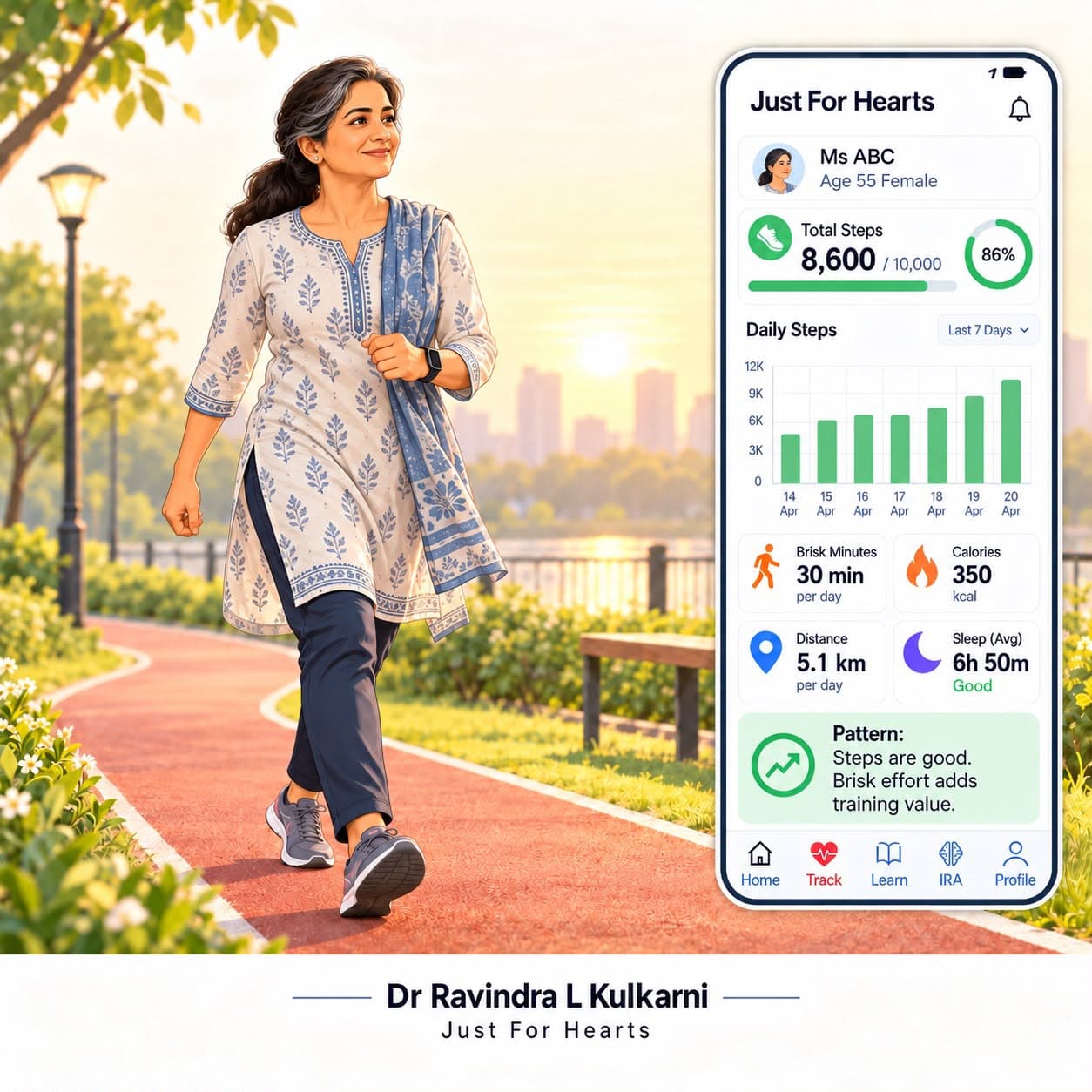
Many people who are active often ask, “I walk 10,000 steps daily. Why do you still recommend Brisk Walking? Isn’t completing the steps enough exercise?”
The answer lies in the difference between how much you walk and how much effort your body exerts while walking. Both are important, but the benefits to your body are not always the same.
1. What do steps really indicate? Steps represent the volume of your daily physical activity. Whether at home, office, market, or while walking, steps accumulate. This reduces sedentary time, burns energy, and can improve metabolic health.
A major scientific review in 2025 found that walking about 7,000 steps daily is associated with many positive health outcomes. So, 10,000 steps is not a mandatory or magical number for everyone.
2. What makes Brisk Walking different? Brisk Walking not only increases steps but also requires your body to exert more effort.
- Heart rate and breathing increase. - Heart and lungs work harder. - Muscles receive regular aerobic challenge.
This moderate-intensity activity can improve cardiorespiratory fitness over time.
However, if your 10,000 steps already include 30 minutes of Brisk Walking, you may not need an additional 30 minutes of walking.
The key is not steps versus Brisk Walking but how much intensity your steps include.
3. How fast is Brisk Walking? Fitness levels vary, so there is no single walking speed suitable for everyone. A simple method is the Talk Test:
- Breathing becomes somewhat faster. - You can talk but cannot sing easily. - You feel effort but no extreme breathlessness.
This indicates moderate intensity for most people.
For those with heart disease or on beta-blockers, pulse alone should not determine exercise intensity. The Talk Test, perceived effort, and personal medical advice are important.
4. What is needed for fitness? According to WHO guidelines for most adults:
- 150–300 minutes of moderate-intensity aerobic activity per week. - At least 2 days of strength training weekly. - Reduce prolonged sitting throughout the day.
Remember three things:
- Steps = how much you move. - Intensity = how hard you work. - Fitness = physical capacity developed through consistent training.
All three are important and do not replace each other.
5. Try this 7-day experiment: Keep your usual walking routine but track two things daily:
- Total steps walked. - Minutes spent in moderate effort (Brisk Minutes).
Use the Just For Hearts app’s steps and exercise trackers.
If you don’t have the app, you can start without premium features.
If you are new to Brisk Walking, start with 10–15 minutes and gradually increase safely.
After 7 days, ask yourself:
- Are Brisk Minutes low despite many steps? - Did you have good aerobic effort on days with fewer steps? - How does the effort feel while walking, and is it changing over time?
Fitness won’t change drastically in a week, but you will begin to understand your activity patterns.
If you have questions about safe pulse rates, Brisk Walking safety, or exercise with heart disease, diabetes, or joint pain, consult with your doctor and share your activity records.
Remember, steps show how much you move, intensity shows how hard you work.
10,000 steps and 30 minutes of Brisk Walking are not alternatives or competitors.
Move more throughout the day, include Brisk Effort according to your capacity, and work on muscle strength.
Because for health, it’s not just the number of steps but improving your body’s function over time that matters.
⚠️ If you experience chest pain, dizziness, or unusual breathlessness during exercise, seek medical advice before continuing.
Dr. Ravindra L Kulkarni MD, DNB FSCAI Cardiology Just For Hearts