
Heart Health
Why Do Your Legs Feel Heavy and Swollen in the Evening?
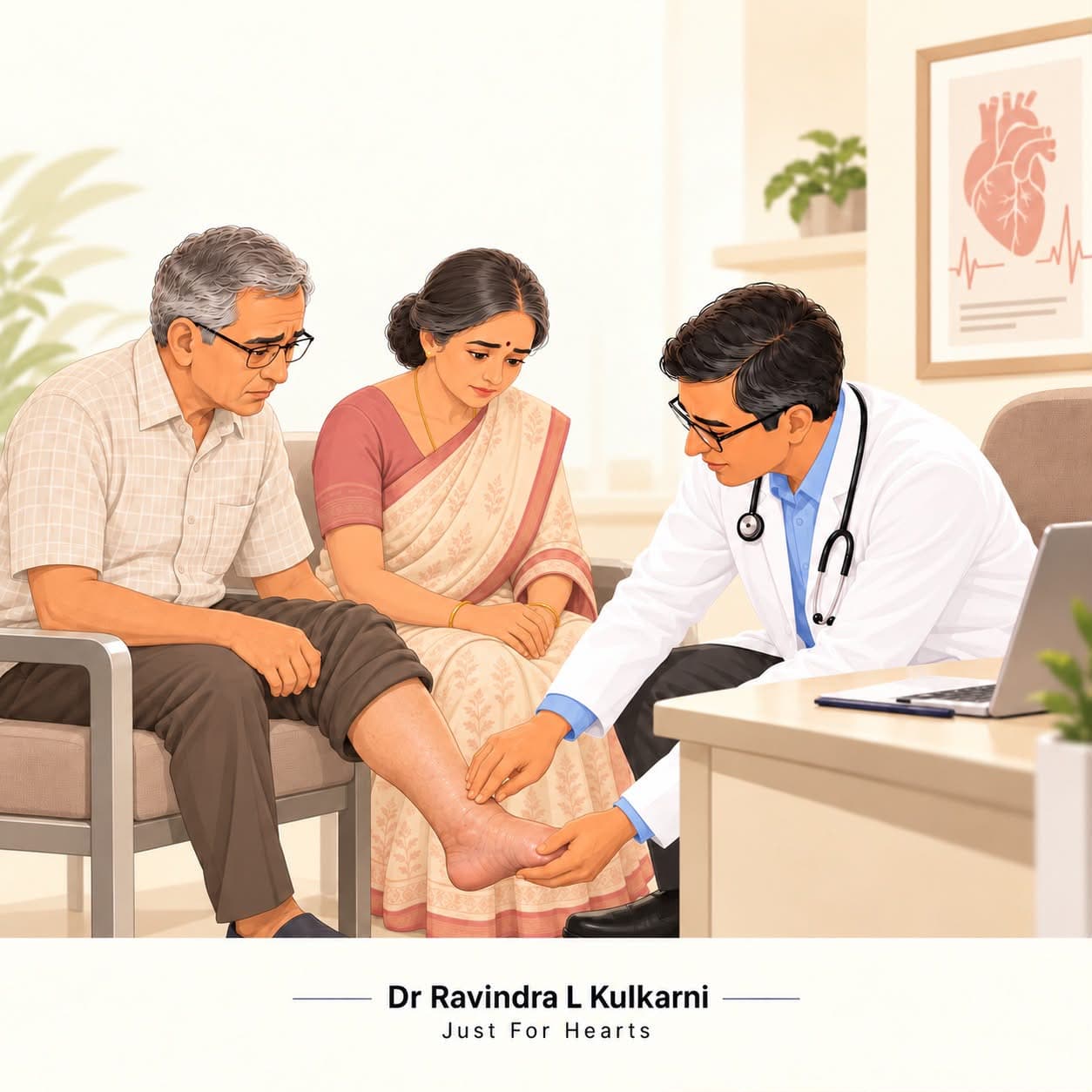
Many people visit the OPD with complaints like:
"Doctor, my legs feel fine in the morning, but in the evening, I get swelling around my ankles." "Sock marks appear, and my slippers feel tight."
Some feel heaviness in their legs throughout the day and wonder if it is related to Heart or Kidney problems.
Actually, not every swelling indicates a serious disease. The timing, whether one or both legs are affected, and accompanying symptoms help determine the cause.
1. Legs swell in the evening but are fine in the morning? Standing all day, sitting for long periods, long travel, or reduced movement can cause fluid to accumulate in the lower legs due to gravity. Hot weather, excess weight, or poor venous return can worsen this. Swelling that reduces after rest at night is an important clue.
2. Are you taking medicines for BP, Pain, or Diabetes? Some BP medicines like Amlodipine can cause swelling near the ankles. Certain painkillers, steroids, or Diabetes medicines like Pioglitazone may also increase swelling. If BP is normal but legs swell, reviewing medicines is important. Do not stop medicines on your own.
3. Do you have Varicose Veins? Visible swollen veins, darkening of skin near ankles, and increased heaviness after standing may indicate Venous Insufficiency (difficulty in blood returning from legs). This is not due to excess body water, so diuretics are not always the solution.
4. Hormonal changes in women? Around periods, during pregnancy, or with some hormonal medicines, fluid retention tendencies change. However, sudden swelling with severe headache or vision changes during pregnancy needs urgent evaluation.
5. When to consider Heart, Kidney, or Liver disease? Swelling in both legs may indicate serious conditions: - Heart Failure / Dilated Cardiomyopathy: swelling with breathlessness, difficulty breathing when lying down, or rapid weight gain. - Chronic Kidney Disease: swelling in legs or face, changes in urine; early stages may have no symptoms. - Liver Cirrhosis: leg swelling, fluid accumulation in abdomen; long-term alcohol use is a common cause. Low blood Albumin can also cause swelling.
6. Sudden swelling in one leg? If one leg suddenly swells with pain, redness, or warmth, get urgent evaluation. It may be due to a blood clot. Sudden breathlessness or chest pain requires emergency care.
7. What can you do daily? - Walk for a few minutes every hour. Move your ankles while sitting. - Elevate legs while resting. - Reduce extra salt and salty packaged foods. - Wear comfortable footwear and avoid staying in one position for long. - If swelling recurs, note morning-evening differences, weight, and BP trends. - Compression stockings may help but choose under doctor’s advice. - Do not start diuretics or reduce fluids on your own. Follow fluid restrictions if you have Heart, Kidney, or Liver disease.
8. When are tests needed? If swelling is frequent, persistent, or increasing, tests like Kidney function, Urine protein, Albumin, Liver function, and Thyroid may be needed. For heart symptoms, ECG or Echo; for vein issues, Venous Doppler may help. Not all tests are needed for every swelling.
If your legs swell in the evening, sock marks appear, you take BP medicines, or have Heart/Kidney/Liver disease and swelling worsens, consult your doctor.
Remember, two people may have similar ankle swelling for different reasons: one due to prolonged sitting, another due to BP medicines, and a third due to Heart, Kidney, or Liver disease.
The key is understanding the pattern of swelling for proper diagnosis.
Start tracking your Weight, BP, activity, and symptoms regularly with the Just For Hearts app. One day’s swelling may not tell much, but patterns over days help make the right decisions.
Dr Ravindra L Kulkarni MD, DNB, FSCAI Senior Consultant Physician & Cardiologist Just for Hearts