
Diabetes
Fasting Sugar Normal but High Post-Meal Sugar: Early Warning or Normal Variation?
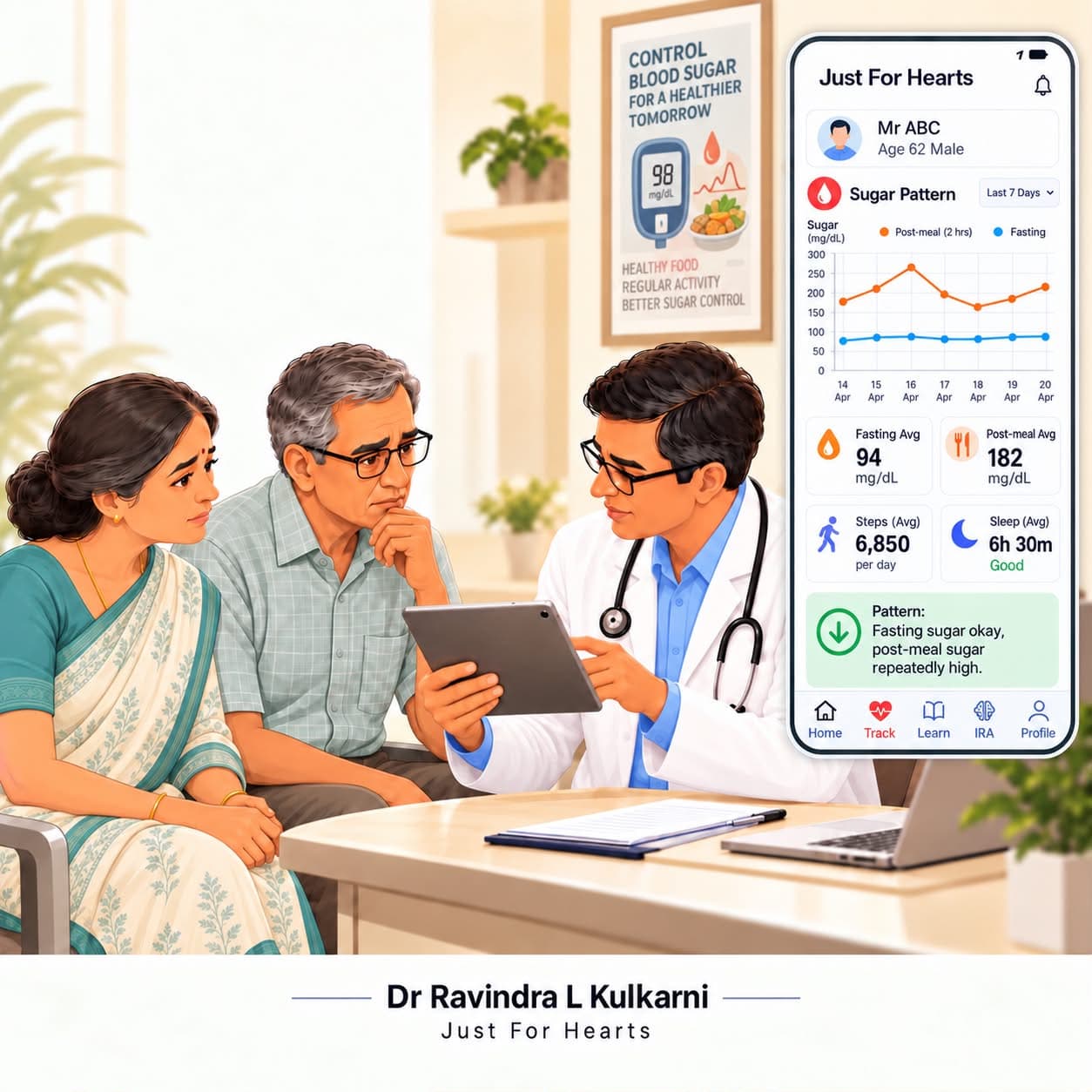
Many people ask, “Doctor, my Fasting Sugar is 94, but after meals it sometimes rises to 165 or even 195. Does this mean my Sugar is under control or not?”
This is an important question.
Having a normal Fasting Sugar does not always mean the body is handling Glucose properly after meals.
Fasting and Post-meal Sugar represent two different aspects of the same Metabolic System.
1. Why does Post-meal Sugar rise even if Fasting Sugar is normal?
When fasting, the Liver releases Glucose into the blood, regulated by Insulin.
After eating, the situation changes: - Glucose enters the blood from Carbohydrates. - The Pancreas releases Insulin in response. - Muscles and other Tissues use the Glucose.
If the initial Insulin response is reduced or Insulin Resistance increases, Post-meal Sugar can be high despite normal Fasting Sugar.
In some individuals, this may be an early sign of Metabolic Dysfunction.
2. Is every Sugar spike dangerous?
No.
Post-meal Sugar rise is natural.
However, how much it rises, how long it stays elevated, and how often it happens are important.
For most adults with Diabetes, the target is to keep Sugar below about 180 mg/dL 1–2 hours after starting a meal, but this varies by person.
Note an important difference: Home-measured Post-meal Sugar and the 75 g OGTT lab test are different tests. Their cutoffs should not be used interchangeably to diagnose Prediabetes or Diabetes.
3. Which patterns should you watch?
From my perspective, three things matter: - Meal Effect: How does Sugar change when the amount of rice, roti, sweet drinks, Fibre, and Protein varies? - Muscle Effect: Does Sugar differ if you sit for a long time after eating versus walking a bit? - Metabolic Effect: Does Sugar stay high repeatedly even with similar meals?
Especially if you have belly fat, Fatty Liver, elevated HbA1c, or a family history of Diabetes, this pattern is more important.
So the question is not just what you ate, but how your body responded to that meal.
4. If HbA1c is normal, should you still worry?
HbA1c reflects average Glucose over the past 2–3 months.
But even with a good average, Post-meal Sugar can sometimes be high.
Therefore, decisions should not be based on a single number but consider Fasting, Post-meal Sugar, HbA1c, and Metabolic Risk together.
Tests like OGTT may be useful if needed.
5. Try this 7-day experiment:
Not everyone needs to check Sugar daily. But if you have Diabetes or your doctor recommends Home Monitoring, observe patterns with selected meals.
- Note meal times and what you ate. - Measure Sugar 2 hours after the first bite. - Record Sugar readings in the Just For Hearts App, along with steps or exercise.
The app does not require a premium subscription to start. Begin logging and understand your pattern.
If physically safe, start a habit of light walking for 10–15 minutes after meals.
After 7 days, ask yourself: 1. After which meals does Sugar frequently rise? 2. Does walking after meals make a positive difference? 3. Does Post-meal Sugar stay consistently high despite normal Fasting Sugar?
Do not draw conclusions from one or two readings, but do not ignore recurring patterns.
If you want help interpreting your Sugar readings, understanding the need for HbA1c or OGTT, or assistance with app tracking, ask with your logs.
Remember: “Fasting Sugar shows the baseline. Post-meal Sugar reveals the response.”
Sugar control is not just about a good fasting number. Understanding how your body handles Glucose after meals is equally important.
Observe the pattern. Change the course.
Important: If you frequently have high Sugar, excessive thirst, frequent urination, or unexplained weight loss, seek medical evaluation. If you take Diabetes medicines or Insulin, be cautious of Hypoglycemia when changing diet or exercise. Do not change medicines on your own.
Dr Ravindra L Kulkarni MD, DNB FSCAI Cardiology Senior Consultant Physician & Cardiologist 25+ Years Clinical Experience Just For Hearts