
Gut Health
Gut Inflammation: How to Reduce It?
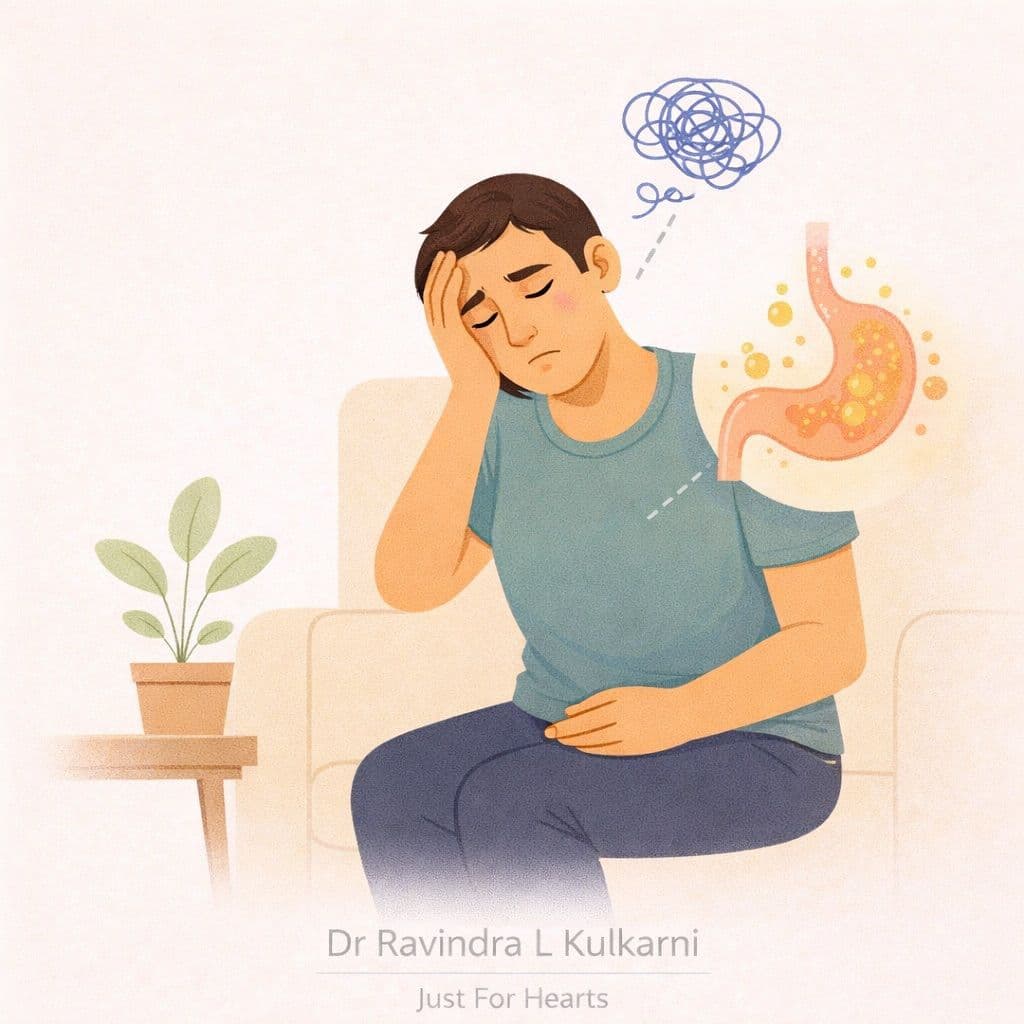
If you frequently experience acidity, bloating, or constipation, and notice changes in your energy, mood, or focus, it might not just be a digestion issue but rather gut inflammation.
1. Why does inflammation occur? Frequent unhealthy eating, stress, and excessive use of medicines can weaken the gut's protective layer (gut lining), allowing unwanted substances to enter. This triggers inflammation in the body.
2. Start by recognizing the symptoms: - Bloating - Acidity / Heartburn - Loose motions / Constipation - Heaviness after meals If these occur frequently, they are not "normal."
3. Gut flora (internal bacterial balance) Good bacteria in the gut manage digestion, immunity, and bowel patterns. An imbalance in these bacteria can increase inflammation.
4. Impact of antibiotics and acidity medications Frequent use of antibiotics and PPI medicines for acidity (like pantoprazole) can reduce gut bacteria and weaken digestion. Therefore, use them only when necessary.
5. Meal pattern Constantly eating without breaks doesn't give the gut a chance to rest. Eating at fixed times allows the gut to repair itself.
6. Processed vs. Natural food Chips, biscuits, bakery items, packaged food, and sugary drinks increase inflammation. Vegetables, fruits, pulses, jowar, bajra, and oats are good fuel for gut bacteria.
7. Fiber and water Fiber (from vegetables, salads, fruits, pulses) improves bowel movement. Introduce it gradually and drink enough water.
8. Stress and sleep - the gut-brain link The gut and brain are connected by nerves and chemicals (like serotonin). Increased stress disturbs the gut. Lack of sleep hinders repair.
9. When to take it seriously? - Weight loss - Blood in stool - Persistent discomfort If you experience these, evaluation is necessary.
10. How to assess? Initially, track your symptoms, bowel pattern, and food response. In specific cases, tests like stool calprotectin (to measure internal inflammation) and CBC, CRP (for body inflammation) may be useful. These tests are not for everyone; they are useful only if you have persistent symptoms.
11. How to recognize improvement? - 1–2 weeks → Reduced bloating - 3–4 weeks → Improved digestion - 6 weeks → Stable pattern Consistency is important.
Gut inflammation is not just a stomach issue; it affects mood, energy, and metabolism. These changes are crucial for both prevention and treatment.
What do you experience most? - Bloating - Acidity - Constipation / Irregular bowel movements - Changes in mood / focus Understanding this is the first step. Now, start tracking.
Basic vitals tracking and self-assessment surveys are free on Just For Hearts. Awareness to action starts here.