
Weight Management
How to Reduce Visceral Fat: 10 Effective Strategies
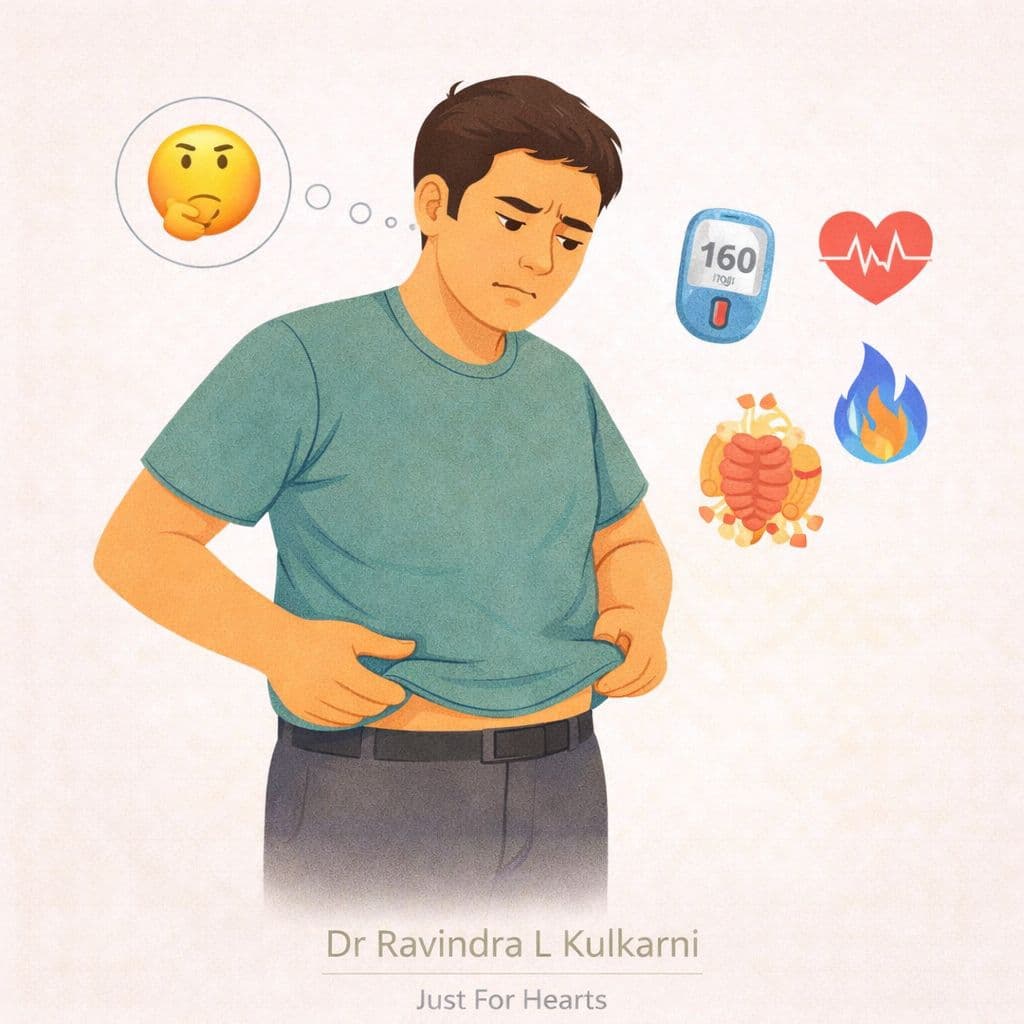
Many people don't have a lot of weight gain, but fat accumulates around their abdomen. This isn't external fat; it's visceral fat.
And this fat is directly linked to Diabetes, Heart Disease, and Inflammation. That's why the approach to reduce it is different.
1. Understand the measurement: Waist-to-Height Ratio. Just measuring your waist isn't enough. If your waist (cm) ÷ height (cm) is greater than 0.5, the risk of Visceral fat is considered increased. For example, if your height is 170 cm, your waist should be less than 85 cm.
2. Meal timing is a key factor. Visceral fat is sensitive to timing. Late-night eating increases Fat storage. Eating at fixed times improves Fat breakdown.
3. Insulin control. Frequent eating and Processed snacks constantly increase Insulin. High Insulin means Fat doesn't burn. Stable Insulin means Fat starts to be used.
4. NEAT (Non-Exercise Activity Thermogenesis). Just going to the Gym isn't enough. Sitting all day increases Visceral fat. Light, continuous Movement helps reduce Fat.
5. Sleep is a Metabolic reset. If Sleep is insufficient or fragmented, Cortisol increases. This Hormone specifically stores Fat around the abdomen.
6. Stress control. Chronic Stress leads to high Cortisol. This Pattern increases Visceral fat and slows down Fat reduction.
7. Increase Muscle mass. Muscle is a Metabolic engine. After Strength training, Calorie burn increases even at Rest.
8. Anti-inflammatory approach. Visceral fat itself increases Inflammation. Therefore, Diet, Sleep, and Routine should all be Anti-inflammatory. (We will discuss this in detail in future Posts.)
9. Protein + Fiber. These increase Satiety. Feeling full reduces Snacking and controls Sugar spikes.
10. Timeline (How long does it take?). 2–3 weeks → start feeling Energy and lightness. 4–6 weeks → waist measurement reduces. 8–12 weeks → clear changes. Consistency is important, no Shortcut.
Visceral fat is not just visible Fat; it's an Indicator of Metabolic imbalance in the body. Reducing it means bringing the entire System back into Balance.
How much Movement do you get throughout the day? - Walk a lot - Walk moderately - Sit a lot - Need to pay attention
Today you have received direction. Now, Consistency and Tracking are important.
Basic Vitals tracking and Self-assessment surveys are Free on Just For Hearts.
This can be a simple yet effective start to understanding changes in your own body.
Dr Ravindra L Kulkarni, MD, DNB, FSCAI (Cardiology) Just For Hearts