
Weight Management
How to Assess Visceral Fat Without a Scan?
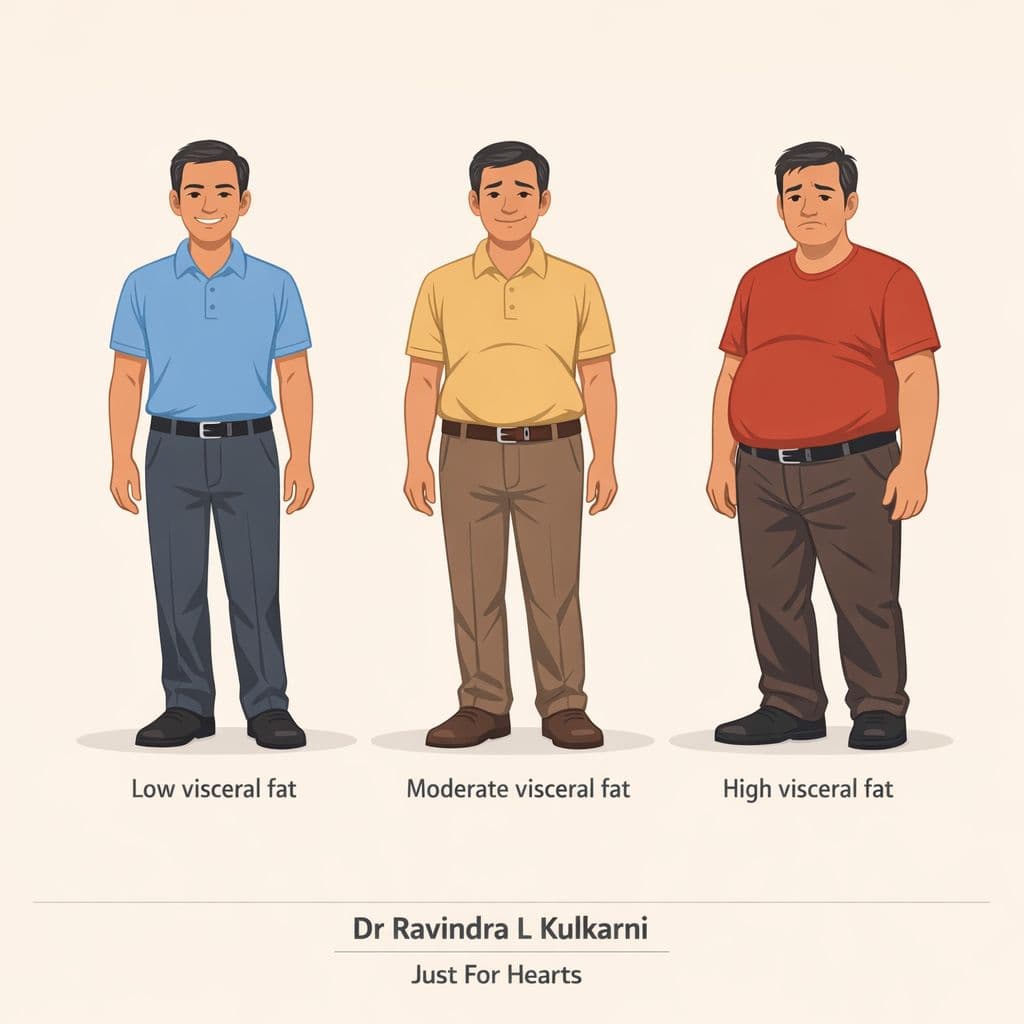
How much visceral fat is in the abdomen is a very common question. Many people ask, “Doctor, I don't have a machine... so how will I know?” The truth is, your body gives signals first; a scan comes later.
1. How is Visceral Fat Measured? (Scientific)
For accurate measurement, CT scan / MRI are used. Some machines (BIA scale) show visceral fat levels (e.g., Karada).
2. What is Considered the Range?
It varies by machine, but generally: 1–9 = acceptable 10–14 = increased risk 15+ = high risk
This means that increased internal fat increases disease risk.
3. So, Should Everyone Get a Scan?
No. In daily OPD, we use simple indicators because the risk starts first, and the scan shows it later.
4. My Simple Assessment Hacks (From Experience)
Is your stomach firm and tight? → High chance of excess internal fat (visceral fat). Not overweight but have a belly? → Thin outside, fat inside. Is the difference between your waist and chest reduced? → Central fat is increasing. Sedentary job + less movement? → Metabolic risk increases. Fatigue + heaviness after meals? → Increased stress on the body.
5. The Most Practical Tool
Waist measurement * Men ≥ 90 cm * Women ≥ 80 cm More than this = consider increased visceral fat.
Waist compared to Height: Waist ÷ Height < 0.5. E.g., Height 170 cm → Waist < 85 cm. This simple rule is very accurate.
6. When to Be Cautious?
Don't wait for a scan; if your waist is increasing, the process has already begun.
What to Remember?
A machine tells you numbers, but your body gives warnings first. Diagnosis appears in a report, but the disease has already started in the body.
Have you ever assessed your own risk without a scan? 👍 Yes 🙂 I'll start now ❤️ Learned something new today
If you found this useful, please share this post with friends and family; many still rely solely on machines.
Dr Ravindra L. Kulkarni, MD, DNB, FSCAI (Cardiology) Just For Hearts